Data Science · Unsupervised Learning · Customer Analytics · 2026
RFM Based Customer Segmentation with Online Retail II Data
Customer segmentation on the Online Retail II dataset using an RFM approach. Five clustering algorithms were compared objectively through internal validation, not chosen manually. The final result splits customers into two main segments.
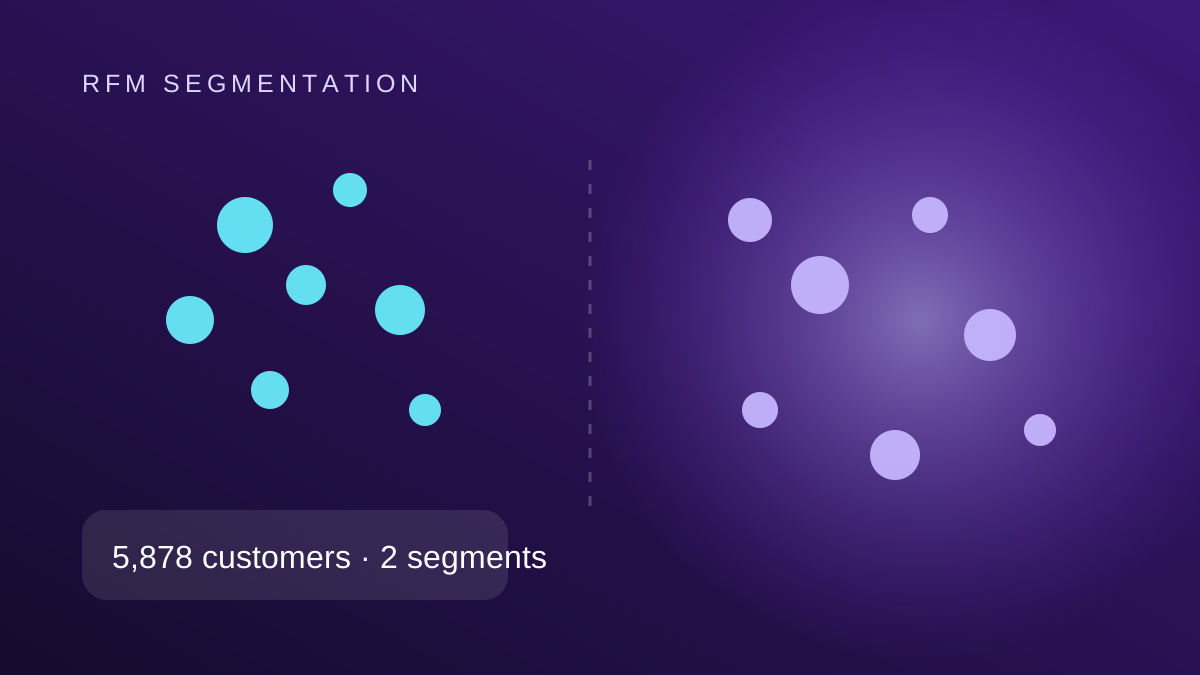
- 5,878Customers analyzedOnline Retail II data
- 5 algorithmsModels comparedK-Means through DBSCAN
- 4 metricsInternal validationCombined ranking without ground-truth labels
- 2 segmentsFinal resultActive high-value and less-active low-value customers
Case study contents
Objective
Group customers based on their purchasing patterns without any ground truth labels, then select the best clustering algorithm objectively using internal validation.
Results and limitations
Out of 5,878 customers, K-Means with two clusters was selected as the best result based on combined ranking across four validation metrics. The first segment represents active, high value customers, the second represents less active, low value customers. Limitation, the dataset has no ground truth labels so external validation like accuracy cannot be performed, and the clustering result depends heavily on the assumed number of clusters.
Visual evidence
Technical details
Open implementation details
Role and contribution
Worked on the entire project alone. Cleaned transaction data, built RFM features, ran five clustering algorithms, validated results with internal metrics, and interpreted each segment profile.
Methodology
Merged two years of transaction data, cleaned invalid transactions, and built three RFM features per customer. Determined the optimal number of clusters, then ran five different clustering algorithms. Each algorithm was scored using four internal validation metrics, and the one with the best combined ranking was selected as the final result.
Technologies
- R
- K-Means
- Gaussian Mixture Model
- Hierarchical Clustering
- PAM
- DBSCAN
- RMarkdown
- Jupyter Notebook